3D Turkey: A Strategic Asset for Modern Design and Production Workflows
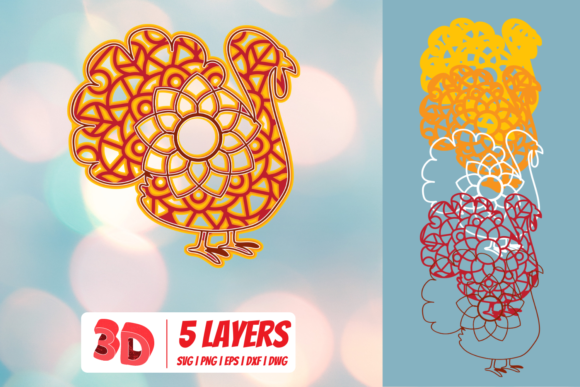
In the rapidly evolving landscape of digital fabrication and creative design, having access to high-quality, versatile assets is no longer a luxury; it is a fundamental requirement for operational efficiency. The 3D Turkey collection represents more than just a graphic element; it is a comprehensive resource designed to bridge the gap between conceptual planning and physical production. By offering a multi-format download package that includes SVG, DXF, PNG, DWG, and EPS files within a single zipped folder, this asset empowers professionals, entrepreneurs, and hobbyists to streamline their workflows across various software ecosystems.
The strategic value of integrating such a diverse file set lies in its adaptability. Whether you are an educator preparing lesson materials, a small business owner launching a seasonal marketing campaign, or a freelancer managing complex client projects, the ability to switch seamlessly between vector editing, raster manipulation, and CAD-based manufacturing tools can significantly impact your bottom line. This guide explores how to leverage the 3D Turkey collection intentionally to achieve superior results, minimize technical friction, and enhance the overall quality of your output.
Understanding the Multi-Format Advantage
One of the primary challenges in digital design is file compatibility. Different machines, software platforms, and production methods require specific file structures. Attempting to convert formats manually often leads to lost data, degraded image quality, or hours of unnecessary labor. The 3D Turkey download addresses this bottleneck by providing a complete suite of formats tailored to distinct use cases.
The inclusion of SVG (Scalable Vector Graphics) is particularly critical for the modern cutting machine ecosystem. SVGs are resolution-independent, meaning they retain perfect clarity at any size. This format is fully compatible with industry-standard software such as Cricut Design Space, Silhouette Designer Edition, Make The Cut (MTC), Sure Cuts A Lot (SCAL), and Brother Scan and Cut "Canvas" software. For creators utilizing these devices, the SVG ensures that intricate details of the 3D Turkey design are preserved without pixelation, allowing for precise cuts on vinyl, cardstock, fabric, or even thin wood.
For those working with Silhouette Basic Edition, the provided DXF (Drawing Exchange Format) offers a robust solution. While some advanced features may be exclusive to higher-tier software versions, the DXF remains the gold standard for interoperability between different computer-aided design (CAD) systems and cutting plotters. It allows for clean geometry that basic software can interpret accurately, ensuring that your project moves from screen to cutter without errors.
On the professional design front, the EPS (Encapsulated PostScript) file is indispensable. Used widely in CorelDraw, Inkscape, and Adobe Illustrator, EPS files support complex vector paths and transparency settings essential for high-end branding and print preparation. When developing a brand identity or creating marketing collateral where color accuracy and scalability are paramount, the EPS version of the 3D Turkey ensures that your visual assets remain crisp and professional regardless of the medium.
Finally, the PNG (Portable Network Graphics) file serves as the go-to option for photo-based applications. With a transparent background and a resolution of 300 DPI, this raster file is ideal for web graphics, social media posts, presentations, and direct printing where vector conversion is not feasible. The high DPI rating guarantees that the 3D Turkey will appear sharp on large displays and printed materials alike, eliminating the jagged edges often associated with low-resolution images.
Strategic Applications Across Industries
The utility of the 3D Turkey extends far beyond simple decoration. Its strategic application depends on how well you align the asset with your specific goals and operational context. For educators and content creators, the versatility of the file formats allows for dynamic lesson planning. You might use the SVG to create interactive cut-out activities for students using school cutting machines, while simultaneously using the PNG for digital slides or handouts. This multi-channel approach enhances engagement and caters to different learning styles.
Entrepreneurs and small business owners can utilize the 3D Turkey to accelerate product development and branding efforts. Imagine launching a limited-edition holiday collection. By downloading the zipped folder, you immediately have the assets needed to produce custom packaging (using the DXF for die-cutting), create social media teasers (using the PNG), and design detailed technical specifications for manufacturers (using the DWG). This consolidation of resources reduces the time spent sourcing assets and allows you to focus on strategy and execution.
Marketers and publishers benefit from the ability to maintain brand consistency across all touchpoints. Because the 3D Turkey is available in formats compatible with major design suites like Adobe Illustrator and CorelDraw, you can ensure that the visual representation of the turkey remains consistent whether it appears on a billboard, a website banner, or a promotional flyer. The transparency of the PNG and the precision of the vector files allow for seamless integration into complex layouts without clashing with other design elements.
Approaching the Workflow Intentionally
To maximize the return on investment from this asset, it is crucial to adopt a deliberate workflow rather than a reactive one. Before opening the zipped folder, consider the end goal of your project. Are you producing a physical object, a digital display, or a printed document? Your answer dictates which file format should be the primary source.
- For Physical Fabrication: Start with the SVG or DXF. Import these directly into your cutting software (Cricut, Silhouette, etc.). Verify that the dimensions match your intended material size before sending the job to the machine. The 3D effect of the turkey design adds depth to physical crafts, making them stand out in trade shows or home decor displays.
- For Graphic Design and Branding: Open the EPS or SVG in Adobe Illustrator or CorelDraw. Use these files to build vector-based compositions. The ability to edit individual paths allows you to recolor the 3D Turkey to match your brand palette perfectly, ensuring visual harmony.
- For Digital Marketing: Utilize the PNG for quick deployment. Since it requires no vector tracing, you can drop it directly into email newsletters, blog posts, or social media captions. The 300 DPI resolution ensures it looks professional even when viewed on high-definition mobile screens.
- For Technical Planning: If you are involved in architectural or engineering contexts where the 3D Turkey is used as a schematic or part of a larger assembly, the DWG file is your best choice. It preserves the geometric data necessary for accurate scaling and modification within CAD environments.
Risks of Unintentional Usage
While the 3D Turkey collection is powerful, relying on it without clear intent can lead to suboptimal outcomes. A common pitfall is using a low-resolution raster file (like a standard JPEG) when a vector format was required, resulting in blurry prints or distorted cuts. Conversely, attempting to import a complex DWG file into a basic word processor can cause compatibility issues and formatting errors.
Another risk involves ignoring the specific capabilities of your software. For instance, assuming that a DXF file will work identically in all cutting software without checking layer settings or path directions can lead to wasted materials. Similarly, using a PNG with a white background instead of a transparent one in a layered design can obscure underlying elements, ruining the aesthetic integrity of the final piece.
Furthermore, failing to plan for scalability can limit the long-term value of the asset. If you create a digital ad using the PNG but later need to scale it up for a large banner, the image will pixelate. To avoid this, always start with the vector formats (SVG, DXF, EPS, DWG) whenever possible, converting to raster only at the very last stage of production if absolutely necessary.
Decision-Making Guidance for Long-Term Success
When evaluating whether to incorporate the 3D Turkey into your current projects, ask yourself three key questions: Does this asset solve a specific problem? Is it compatible with my existing tools? Can it be adapted for future needs?
If the answer to all three is yes, the 3D Turkey is likely a valuable addition to your toolkit. Its presence in a zipped folder containing SVG, DXF, PNG, DWG, and EPS formats means it is ready to serve multiple roles simultaneously. This flexibility supports agile decision-making, allowing you to pivot quickly between digital and physical mediums without losing quality or wasting time on conversions.
By treating the 3D Turkey not just as a static image but as a flexible component of your broader design and production strategy, you unlock its full potential. Whether you are enhancing customer experiences through personalized gifts, streamlining operations for a busy workshop, or elevating the visual standards of your brand, this asset provides the foundational quality needed to succeed. Embrace the variety of formats, respect the specific requirements of each software environment, and let the 3D Turkey become a reliable partner in your journey toward better results.