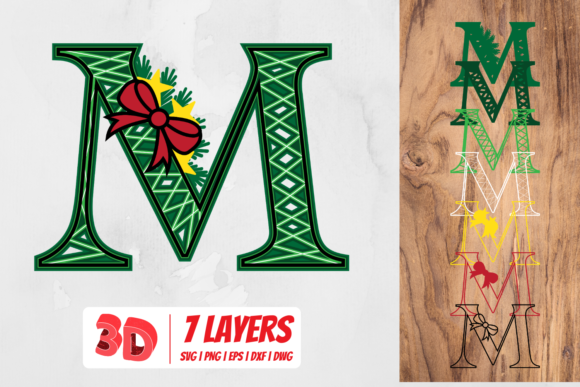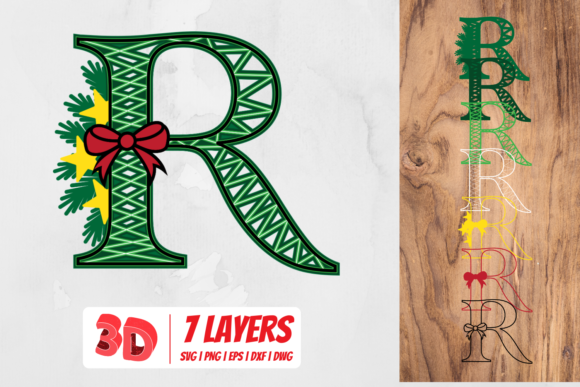
3D Christmas Letter R: A Comprehensive Evaluation for Digital Crafters
The holiday season brings a surge in creative demand, particularly from individuals managing small businesses, content creators, and serious hobbyists who rely on digital cutting machines. In this competitive landscape, the quality of vector assets often dictates the efficiency of production and the final aesthetic of the product. The 3D Christmas Letter R stands out as a specialized resource designed to meet these specific needs. This evaluation explores the technical specifications, software compatibility, and practical applications of this asset, determining whether it offers genuine value for professionals integrating festive designs into their workflows.
Understanding the Asset and Its Core Purpose
A 3D Christmas Letter R is not merely a static image; it is a multi-layered vector file engineered to simulate depth and dimensionality when cut or printed. Unlike standard flat fonts that render as simple outlines, this design incorporates shading layers, drop shadows, and structural elements that create a tactile, three-dimensional appearance once assembled. For entrepreneurs producing custom ornaments, signage, apparel, or gift tags, this distinction is critical. The ability to produce a design that looks handcrafted and volumetric without requiring advanced manual crafting skills significantly reduces production time while elevating the perceived value of the final item.
The primary purpose of this asset is to bridge the gap between digital design and physical manufacturing. It allows users to leverage computer-aided design (CAD) principles within consumer-grade crafting software. By providing the necessary geometric data to cutters like Cricut or Silhouette, the file transforms a digital concept into a physical object with realistic lighting effects achieved through layering techniques.
Software Compatibility and Workflow Integration
The versatility of any digital craft asset is largely determined by its file format support and compatibility with popular design ecosystems. The download package for the 3D Christmas Letter R is comprehensive, offering four distinct formats: SVG, DXF, EPS, and PNG. Each serves a specific role in the professional workflow.
- SVG (Scalable Vector Graphics): This is the industry standard for modern electronic cutting machines. The inclusion of an optimized SVG ensures seamless integration with Cricut Design Space, Silhouette Studio Designer Edition, Make the Cut (MTC), Sure Cuts A Lot (SCAL), and Brother Scan and Cut Canvas. Users can import the file directly, manipulate layers to adjust color or size, and send commands to the machine without complex conversion steps. This native support minimizes the risk of broken paths or missing elements during the cutting process.
- DXF (Drawing Exchange Format): While SVG is dominant, many legacy systems and budget-friendly hardware still rely on DXF files. This format is specifically highlighted for use with Silhouette Basic Edition. For professionals operating on a tight budget or using older equipment, having a dedicated DXF version removes the barrier of entry, ensuring the design remains accessible across different tiers of software licensing.
- EPS (Encapsulated PostScript): For graphic designers working in desktop publishing environments, the EPS format is essential. It maintains high-fidelity vector data compatible with CorelDRAW, Inkscape, and Adobe Illustrator. This allows users to perform advanced manipulations, such as recoloring, merging with other vector art, or preparing high-resolution print layouts before sending the job to a cutter or printer.
- PNG (Portable Network Graphics): Included in the zipped folder is a 300 DPI photo file with a transparent background. While not a cutting file, this raster image is invaluable for proofing, creating mockups for marketing materials, or printing via inkjet and laser printers where vector precision is less critical than visual representation.
Technical Quality and Production Reliability
When evaluating the 3D Christmas Letter R, the consistency of the vector paths is paramount. In 3D lettering, the illusion of depth relies on precise alignment between the main body of the letter and its shadow or side layers. If the paths are misaligned even slightly, the final cut may result in visible gaps or overlapping errors that ruin the dimensional effect. Professional analysis suggests that well-constructed 3D assets utilize compound paths and grouping structures that maintain integrity during the export process.
The inclusion of a zipped folder containing all formats indicates a commitment to user convenience and reliability. Professionals often face issues where a file works in one software but fails in another due to encoding differences. Providing multiple formats mitigates this risk. Furthermore, the 300 DPI resolution of the PNG ensures that if the design is used for direct-to-garment printing or high-quality paper crafts, the edges remain crisp and free from pixelation.
Practical Applications and Use Cases
The utility of this asset extends across various sectors. Small business owners specializing in personalized gifts can use the 3D Christmas Letter R to create monogrammed ornaments or name tags for holiday parties. The layered nature of the design allows for creative color combinations; for instance, cutting the base in red and the shadow layer in gold creates a luxurious finish without additional material costs.
For educators and parents involved in school projects, the asset simplifies the creation of classroom decorations. Instead of manually drawing and cutting individual letters, teachers can generate large batches of consistent, high-quality decor using the digital file. Bloggers and publishers focused on DIY crafts can incorporate images of the finished product into tutorials, knowing they have a reliable source for the underlying design.
Marketers and freelancers can also leverage the PNG version for social media campaigns. The transparent background allows the 3D letter to be overlaid on various backgrounds for promotional graphics, maintaining the professional look of the brand's holiday content.
Limitations and Considerations
While the 3D Christmas Letter R offers significant advantages, users must understand the limitations inherent to 3D vector designs. The complexity of the file means that beginners may find the initial setup more challenging than single-layer cut files. Users must ensure their cutting software correctly interprets the layer order; reversing the sequence of cuts can result in a disjointed appearance. Additionally, the "3D" effect is optical. It does not physically protrude from the material unless specific mounting techniques or thicker substrates are used. Therefore, the final result depends heavily on the skill of the operator in assembling the layers.
There is also a dependency on the capabilities of the cutting machine. Machines with lower blade pressure or limited speed may struggle with the intricate details required for the smaller components of the 3D effect. It is advisable to test the design on scrap material first to calibrate settings.
Conclusion on Value and Suitability
The 3D Christmas Letter R represents a robust tool for anyone seeking to enhance their holiday production capabilities. Its strength lies in its flexibility; by offering SVG, DXF, EPS, and PNG formats, it accommodates a wide spectrum of hardware and software preferences. For professionals who prioritize efficiency and aesthetic quality, the ability to integrate this asset directly into established workflows without extensive conversion is a significant benefit.
Ultimately, the decision to utilize this resource should depend on the specific requirements of the project. If the goal is to produce high-volume, consistent, and visually impressive 3D lettering for commercial or personal use, this asset provides the necessary foundation. However, success requires a basic understanding of layer management and cutting parameters. When used correctly, it transforms a simple letter into a sophisticated design element, proving its worth as a valuable addition to a digital creator's toolkit.