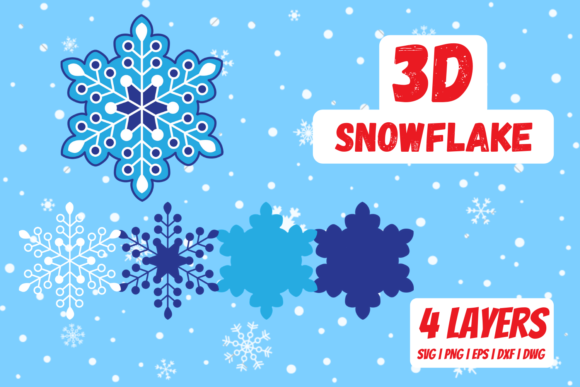
3D Snowflake: A Versatile Asset for Professional and Creative Workflows
In the landscape of digital design and physical production, the difference between a project that flows smoothly and one that stalls often comes down to file compatibility and asset quality. The 3D Snowflake is not merely a decorative image; it is a functional component designed to integrate seamlessly into diverse workflows ranging from commercial branding to personal crafting projects. Whether you are a small business owner preparing holiday packaging, an educator creating classroom materials, or a hobbyist utilizing a cutting machine, having access to a versatile, high-quality asset is critical for maintaining efficiency.
This resource provides a comprehensive suite of formats—SVG, DXF, PNG, DWG, and EPS—all packaged in a single zipped folder. This multi-format approach addresses the fragmentation common in digital-to-physical workflows, ensuring that the creative vision remains intact regardless of the software platform or hardware device being used. By understanding how each format functions within specific tools, professionals can streamline their preparation, execution, and final output phases without unnecessary technical hurdles.
Integrating 3D Snowflake into Design and Production Pipelines
The modern creative process rarely relies on a single software environment. Designers often move between vector-based illustration programs, raster editing tools, and specialized cutting software. The inclusion of multiple file types with the 3D Snowflake asset eliminates the need for time-consuming conversions that can degrade quality or alter dimensions. Each format serves a distinct purpose within the broader workflow, acting as a bridge between different stages of production.
For instance, the transition from concept to prototype requires precision. When working on a project that involves laser cutting or CNC routing, the DWG and DXF files are indispensable. These vector formats preserve geometric data, allowing engineers and fabricators to import the snowflake directly into CAD software for scaling and material planning. Unlike raster images, these files ensure that the intricate details of the 3D effect remain sharp when scaled up for large signage or down for miniature ornaments.
Conversely, the EPS and SVG versions cater to graphic designers who prioritize flexibility and layering. The Encapsulated PostScript (EPS) format is a standard in professional publishing and print design. It allows users to edit the artwork in applications like CorelDraw, Inkscape, and Adobe Illustrator while maintaining editable paths. This is particularly useful for marketing teams who need to incorporate the snowflake into brochures, flyers, or social media graphics where brand colors and typography must be adjusted dynamically before sending the file to a printer.
Workflow Optimization for Cutting Machine Users
One of the most significant use cases for this asset lies in the realm of digital fabrication using electronic cutting machines. The SVG version of the 3D Snowflake is specifically optimized for compatibility with popular design ecosystems. Because SVGs are web-standard vectors, they retain scalability and editability, making them ideal for software that translates digital designs into physical cuts.
Users operating Cricut Design Space can upload the SVG file to create custom decals, cardstock decorations, or vinyl transfers. The file structure supports the "Weld" and "Slice" operations native to the software, allowing creators to combine the snowflake with other elements to form complex monograms or seasonal messages. Similarly, those using Silhouette Studio Designer Edition benefit from the same high level of control, enabling precise adjustment of cut lines and registration marks.
The ecosystem extends further to include Make the Cut (MTC), Sure Cuts A Lot (SCAL), and Brother Scan and Cut's Canvas software. For freelancers and entrepreneurs running home-based businesses, this compatibility is a major efficiency booster. Instead of purchasing separate licenses or struggling with proprietary file formats, the universal nature of the SVG ensures that the 3D Snowflake works across the entire spectrum of available cutting tools. This reduces downtime and allows the creator to focus on the artistic direction rather than troubleshooting file errors.
It is important to note the distinction for users of the basic tiers of these platforms. While the full feature set of cutting software may require premium subscriptions, the DXF file included in the download offers a robust alternative. Designed specifically for compatibility with Silhouette Basic Edition, the DXF format ensures that even users on budget-friendly setups can produce high-quality results. This democratization of access means that the barrier to entry for creating professional-grade holiday crafts or promotional items is significantly lowered.
Visual Assets for Marketing and Digital Content
Beyond physical fabrication, the 3D Snowflake serves as a vital asset for digital marketing and content creation. The PNG file provided in the package is rendered at 300 DPI with a transparent background. This specification is crucial for maintaining visual integrity across various digital mediums, from website headers to email newsletters and social media posts.
Marketers and bloggers often struggle with low-resolution assets that appear pixelated when stretched or printed. The high resolution of this PNG ensures that the snowflake looks crisp whether displayed on a high-definition mobile screen or printed on a glossy brochure. The transparent background allows for seamless integration over any color scheme or photographic background, eliminating the unsightly white boxes that often ruin the aesthetic of a design. This is particularly valuable for educators creating lesson plans or presentations, where the visual element needs to stand out against varied slide backgrounds without requiring complex masking techniques.
The versatility of the asset also supports consistency in branding. Small business owners can utilize the 3D Snowflake as a recurring motif in their seasonal campaigns. By using the same vector source for both print (via EPS/DWG) and digital (via PNG/SVG) channels, companies ensure that their brand identity remains cohesive. The ability to scale the image infinitely without loss of quality means that a logo element created for a business card can be effortlessly expanded for a billboard or a storefront window display.
Practical Implementation and Quality Control
Successful implementation of digital assets requires attention to detail during the preparation phase. Before importing the 3D Snowflake into a project, it is advisable to verify the layer structure within your chosen software. In vector programs like Adobe Illustrator or Inkscape, checking that all paths are closed and oriented correctly prevents issues during the cutting or printing process. Open paths can lead to incomplete cuts or unexpected fill errors, disrupting the workflow.
Organization is another key factor in managing these files effectively. Since the download arrives in a zipped folder, extracting the contents immediately and categorizing them by format (e.g., separating vector files from raster files) saves time during future projects. Creating a dedicated library for seasonal assets allows professionals to quickly retrieve the 3D Snowflake whenever a new campaign or craft project arises, reducing the administrative overhead associated with file management.
Quality control should also extend to the testing phase. Before committing to a large batch of production, always perform a test run. If using a cutting machine, cut a single layer of scrap material to verify that the settings for pressure, speed, and blade depth are correct for the specific material being used. For print jobs, proofing the design at 100% scale ensures that the text and fine details of the snowflake render as intended. This proactive approach minimizes waste and ensures that the final product meets professional standards.
Long-Term Value and Adaptability
The utility of the 3D Snowflake extends beyond immediate projects. As a digital asset, it possesses long-term value due to its adaptability. Trends in design and technology evolve, but the fundamental requirements for scalable, compatible files remain constant. By investing in a multi-format pack, users future-proof their collections, ensuring that the asset remains usable even if software interfaces change or new hardware is introduced.
This longevity is beneficial for educators and content creators who build libraries of resources over years. A snowflake design purchased today can be repurposed for a lesson plan next year or a blog post five years from now without needing to recreate the artwork from scratch. Furthermore, the open nature of the formats encourages experimentation. Creators can deconstruct the vector layers to create new variations, such as changing the symmetry or combining it with other geometric shapes to develop unique patterns.
In conclusion, the 3D Snowflake represents more than just a festive graphic; it is a tool designed to facilitate smooth, efficient, and high-quality work across a wide range of disciplines. Its inclusion of SVG, DXF, PNG, DWG, and EPS formats addresses the complex needs of modern workflows, bridging the gap between digital design and physical reality. Whether the goal is to produce a single handmade gift or launch a comprehensive holiday marketing campaign, this asset provides the reliability and flexibility necessary for success.
By integrating this resource into your planning and execution strategies, you align yourself with best practices in digital asset management. The result is a streamlined process that maximizes creativity while minimizing technical friction, allowing you to focus on the outcomes that matter most to your audience and your goals.